
Heel Spur Treatment for Lasting Heel Pain Relief
Heel pain that bites with your first morning step often comes with a worry: a heel spur. Here is the reassuring truth — a heel spur is common, rarely as alarming as it sounds, and the pain around it responds well to the right care.
At a Glance
Heel Spurs
Affects
Underside of the heel bone
Onset
Sharp with first morning steps
Pattern
Eases with rest, returns with activity
Recovery
Pain settles well with care
Surgery
Almost never needed
What Is a Heel Spur?
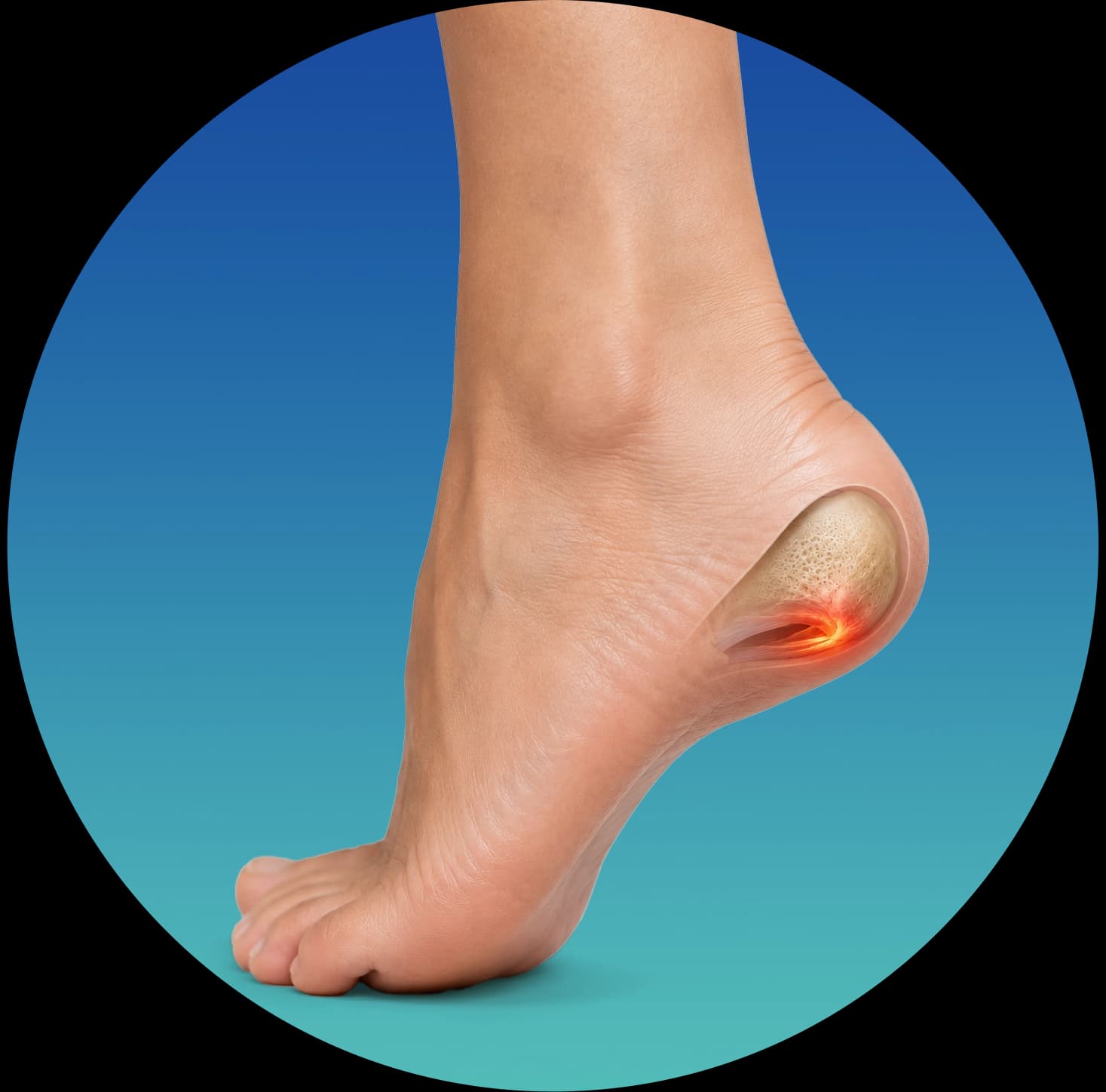
A heel spur is a small deposit of calcium that builds up on the underside of the heel bone, usually where the plantar fascia — the long ligament of the sole — attaches. It forms gradually, in response to ongoing strain.
Here is what surprises most people: the spur itself is often painless. The discomfort you feel usually comes from the irritated, inflamed tissue around it — the same tissue involved in plantar fasciitis.
Symptoms You Might Notice
Heel spur pain has a familiar pattern — it tends to announce itself the same way for most people, and that pattern is a strong clue.
First steps & after rest
Sharp heel pain with the first steps
The hallmark of a heel spur — a sharp, stabbing pain in the heel with your first steps out of bed, or when you stand up after sitting for a while. It often eases as you get moving, only to return the next time you rest.
Intensity
Through the day
A dull ache after standing or walking
After long hours on your feet, the sharp pain gives way to a deep, dull ache through the heel. It eases with rest, then returns with activity — a steady cycle that wears on you over the day.
Intensity
On touch & hard ground
Tenderness, worse on hard floors
Press on the base of the heel and you will find a tender, sensitive spot. The pain noticeably worsens on hard floors or in unsupportive shoes, which give the heel nothing to cushion against.
Intensity
Also watch for
Pain that returns each time you get going again after sitting
A heel that feels bruised or sensitive underfoot
Discomfort that builds the longer you stay on hard ground
Why Heel Spurs Happen
Heel spurs build up when the heel is placed under repeated strain — usually a combination of mechanics, surfaces and footwear working together over time.
The strain keeps working
Left unaddressed, the strain that creates a heel spur keeps working away — so the pain tends to linger and, over time, can change the way you walk. Treating the cause early is the quickest path back to comfort.
Long-term tension on the plantar fascia — the ligament of the sole — pulls constantly at the heel bone, the strain that most often drives a spur to form.
Feet that roll inward with each step overload the heel and stretch the plantar fascia, adding the repeated strain that calcium deposits build in response to.
Long hours on hard surfaces
Standing, walking or running on hard floors for hours sends impact straight through the heel, with little to absorb it — a steady source of strain.
Worn-out, unsupportive footwear
Shoes that have lost their cushioning or never had proper heel support leave the heel exposed to far more force with every step.
Tight calves, extra weight and age
Tight calf muscles pull on the heel, extra body weight loads it further, and the natural thinning of the heel’s fat pad with age reduces its built-in cushioning.
How Stride Podiatry Treats Heel Spurs
We don’t chase the spur — we treat what is actually causing your pain: the strain and inflammation around it. Your plan is built around what we find in your assessment.
Treatment also includes practical footwear guidance and simple home exercises — everyday changes that protect the heel and keep the pain from returning.
19+
Years
3
Cities
500+
Students Trained
10K+
Patients Treated
Dr. Pallavi Singh
Founder · Stride Podiatry India
Since 2014, Stride Podiatry has helped over 10,000 people walk free of foot pain. Founded by Dr. Pallavi Singh — a foot specialist with 19+ years of experience and the Indian Podiatry Association's Lifetime Achievement Award — our clinics treat the person, not just the pain.
You leave with a clear plan.
Frequently Asked Questions
Almost never. Heel spur pain comes from the inflamed tissue around the spur, not usually the spur itself — and that tissue responds very well to orthotics, stretching and manual therapy. Surgery is a rare last resort.
They are closely linked but not identical. Plantar fasciitis is inflammation of the ligament of the sole; a heel spur is a calcium deposit that can form alongside it. Both are treated by addressing the same underlying strain.
The spur itself does not usually dissolve, but that is not the goal — the goal is to relieve the pain, and that very often settles fully once the cause is treated.
Overnight, the tissue tightens while you rest. Your first steps stretch it suddenly, which is when the sharp pain strikes. It often eases as you move — but returning pain is a sign to have it assessed.
Many people feel meaningful relief within a few weeks of offloading the heel properly. Lasting comfort comes from also correcting the cause — your gait, footwear or calf tightness.
Book Your Appointment
Imagine starting your morning with an easy first step — no sharp catch in the heel, no bracing for the pain.
With the right care, that is well within reach. Book your appointment online, or call Stride Podiatry. Let's get your heels comfortable again.