
Overpronation Treatment for Stable, Pain-Free Steps
Every step you take begins with your feet — and if they roll too far inward, the effects travel upward. Overpronation is one of the most common reasons behind recurring heel, knee and back pain. The reassuring part: once it is measured, it is very manageable.
At a Glance
Overpronation
Affects
Feet, knees, hips & spine
Key sign
Inward ankle roll & flat arches
Pattern
Chain-reaction pain with activity
Management
Well-controlled with orthotics
Surgery
Not required
What Is Overpronation?
As your foot lands, it naturally rolls slightly inward — this is pronation, and it helps your foot absorb shock. Overpronation is when that inward roll goes too far: the arch flattens excessively and the ankle rolls in with every step.
On its own it may not hurt — but it quietly changes how force travels through your feet, knees, hips and spine. That is usually where the trouble begins, and why the pain can seem unrelated to the feet at first.
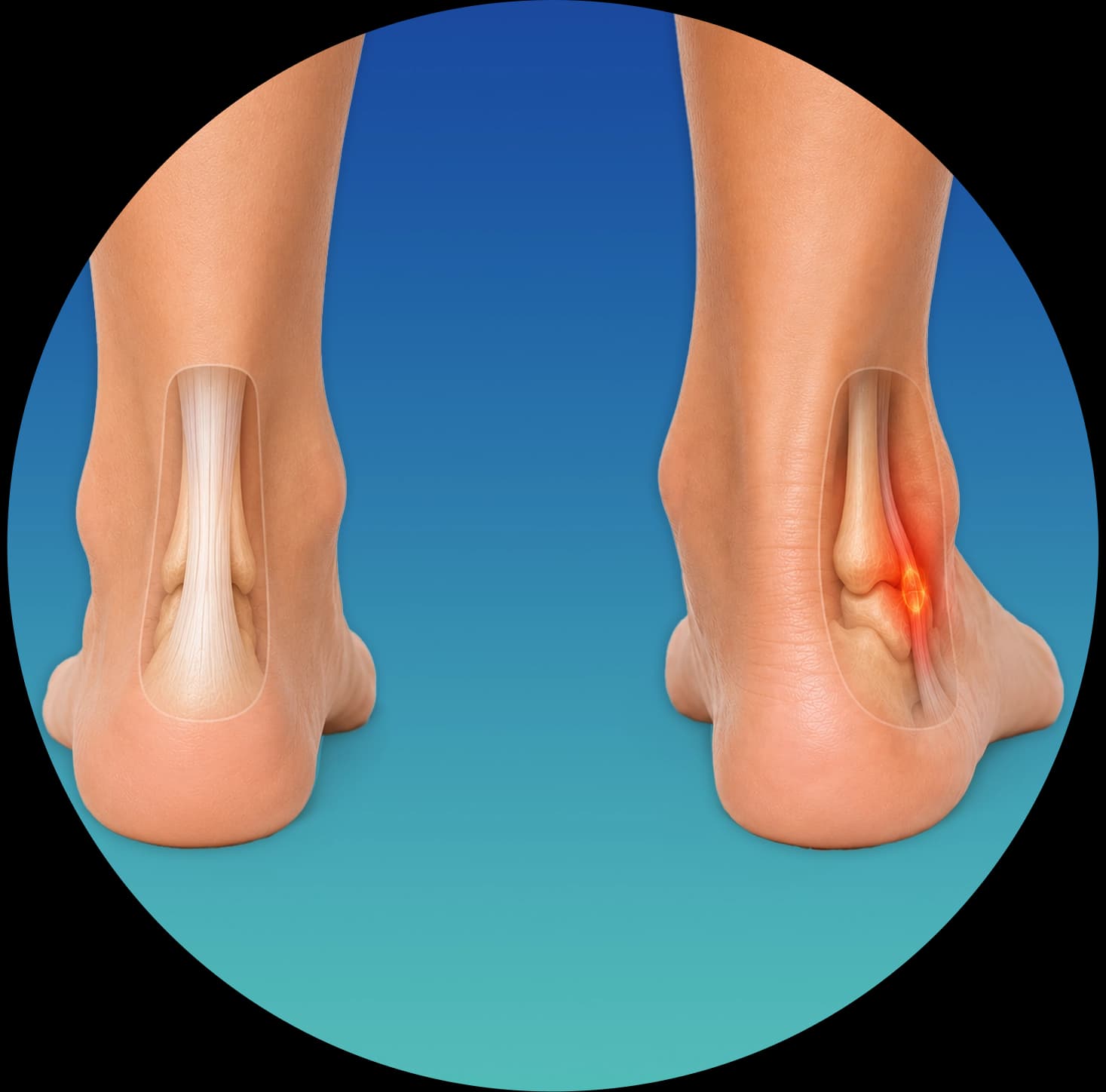
Signs You Might Notice
Overpronation often shows itself indirectly — through problems elsewhere in the body that seem unrelated until the movement is properly assessed.
In your feet & arches
Flat arches and inward ankle roll
Feet that look flat or roll noticeably inward when you stand, and shoes that wear down faster along the inner edge. These are the visible signs the alignment is off — often present long before pain begins.
Intensity
During and after activity
Aching knees, hips and lower back
When your feet over-roll, the strain travels upward with every step. Aching knees, sore hips or a nagging lower back after walks or exercise are often traced — sometimes as a surprise — back to overpronation.
Intensity
Over weeks and months
Recurring injuries that keep coming back
Plantar fasciitis, shin splints, bunions, arch pain — conditions that return despite treatment. Overpronation is often the silent mechanical driver that makes these problems recur until the alignment is addressed.
Intensity
Also watch for
Shoes wearing down faster on the inner edge
Feet that feel unstable or tired on uneven ground
Why Overpronation Happens
It usually comes down to how your feet are built and supported — a combination of structure, strength and what you put on your feet each day.
The cost of waiting
Because your feet are the foundation of everything above them, unmanaged overpronation keeps generating new problems — plantar fasciitis, knee pain and back pain among them. Correcting the alignment early stops that chain before it starts.
Flat feet or naturally low arches
A low arch provides less structure to resist the inward roll — often hereditary, so if a parent overpronates, the pattern may well run in the family.
Loose or flexible ligaments
Ligaments that are naturally more flexible allow the arch to collapse under body weight rather than holding its shape through each step.
Weak foot, calf or hip muscles
The muscles that should steady each stride — in the foot, calf and hip — when under-developed allow the ankle to drift inward with every step.
Extra load on the arch
Body weight, pregnancy and long hours on your feet all increase the force pushing the arch down — outpacing what the foot structure can resist without support.
Unsupportive footwear
Shoes with no arch structure give the foot nothing to lean on, allowing — and in some cases encouraging — the inward roll that overpronation describes.
How Stride Podiatry Treats Overpronation
We do not just ease the aches overpronation causes — we measure the movement itself and bring it back into balance. Your plan is built around what we find.
Treatment also includes targeted strengthening exercises and personalised footwear guidance — so your shoes and orthotics work together, not against each other.
19+
Years
3
Cities
500+
Students Trained
10K+
Patients Treated
Dr. Pallavi Singh
Founder · Stride Podiatry India
Since 2014, Stride Podiatry has helped over 10,000 people walk free of foot pain. Founded by Dr. Pallavi Singh — a foot specialist with 19+ years of experience and the Indian Podiatry Association's Lifetime Achievement Award — our clinics treat the person, not just the pain.
You leave with a clear plan.
Frequently Asked Questions
They are closely related but not identical. Flat feet describes a low or fallen arch; overpronation describes the movement — the foot rolling too far inward as you walk. Flat feet are a common cause of overpronation.
Not always. Mild overpronation with no pain may simply need the right footwear. But when it is causing recurring aches or injuries, correcting it properly is what breaks the cycle.
The foot's structure does not change, but the movement can be well controlled. Custom orthotics support each step and strengthening builds lasting stability — together, they keep overpronation from causing problems.
Telltale clues are inner-edge shoe wear, flat-looking arches and recurring lower-limb aches. A gait analysis at Stride measures it precisely, so you are not left guessing.
Absolutely — many runners do. With the right orthotic support, footwear and strengthening, overpronation does not have to hold back your running or your goals.
Book Your Appointment
Imagine moving through your day on feet that feel steady, supported and strong.
With the aches that kept returning finally behind you — and it starts with understanding how you move. Book your appointment online, or call Stride Podiatry. Let's get you back on a stronger footing.