
Plantar Fasciitis Treatment for Lasting Heel Pain Relief
That sharp, stabbing pain in your heel with your very first step out of bed — that is the unmistakable signature of plantar fasciitis. The reassuring part: it is common, it is well understood, and at Stride Podiatry, it is very treatable.
At a Glance
Plantar Fasciitis
Affects
Heel & plantar arch
Typical onset
First morning steps
Pattern
Eases with movement, returns after rest
Recovery
Weeks to months with treatment
Surgery
Rarely needed
What Is Plantar Fasciitis?
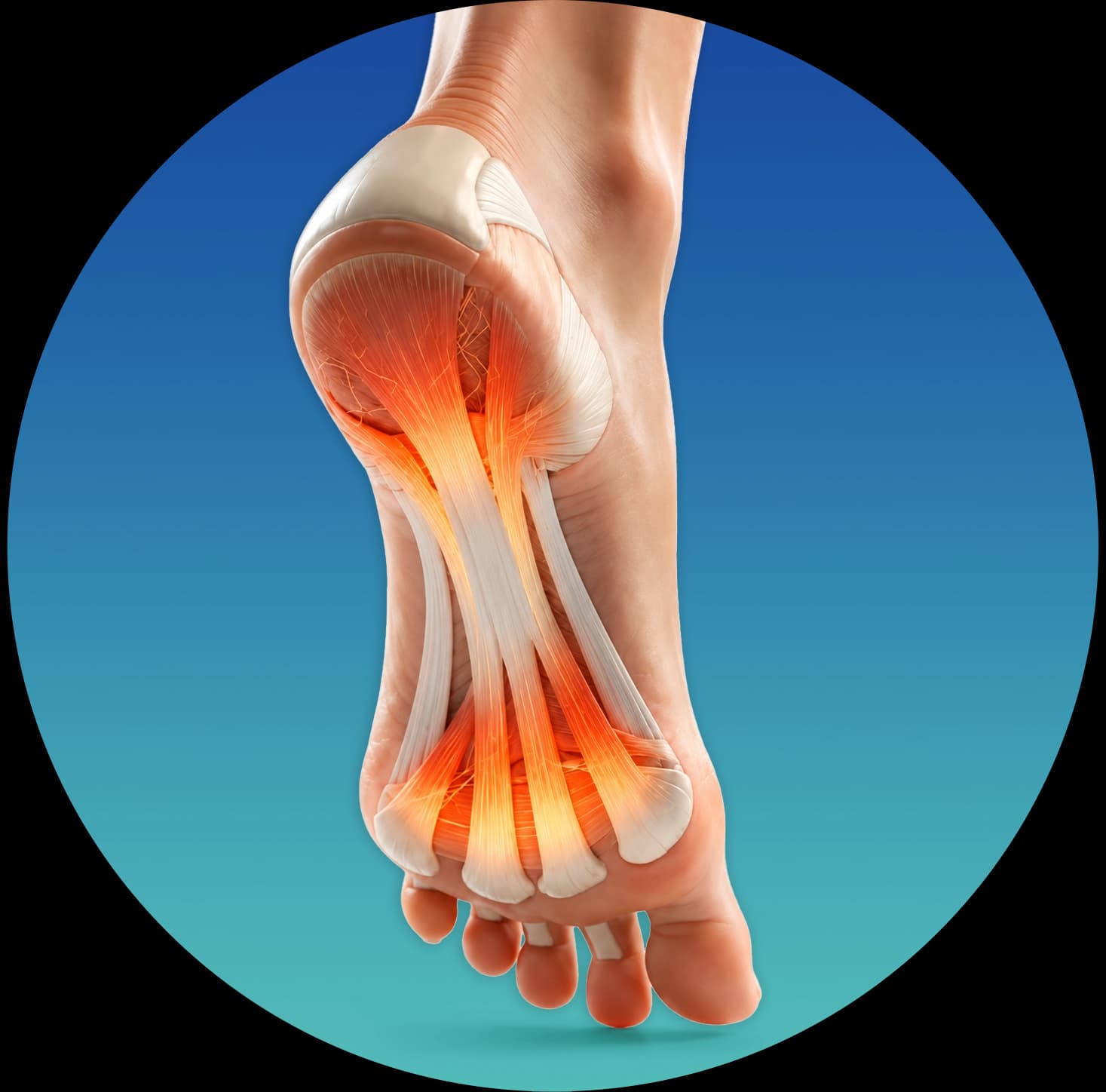
Plantar fasciitis is the most common cause of heel pain. The plantar fascia is a thick band of tissue that runs from your heel to your toes — a bowstring that supports your arch with every step you take.
When it is overstretched or overloaded, tiny tears form, the tissue becomes irritated and inflamed, and that familiar ache settles in beneath your heel. The longer it goes untreated, the more deeply embedded the pattern becomes — which is why early care matters.
Symptoms You Might Notice
Plantar fasciitis has a telltale pattern. It follows you through your day in a very particular way — and that pattern is itself a clue to the cause.
First thing in the morning
Sharp, stabbing heel pain
The most recognisable sign — that knife-like pain with your very first step out of bed, before the tissue has had a chance to warm up.
Intensity
As you move around
Pain that briefly eases
After a few minutes of walking the pain often softens. The fascia loosens with gentle movement — which can make the condition easy to underestimate.
Intensity
After long standing or rest
Dull ache that creeps back
After hours on your feet, or when you stand up from sitting, the soreness returns — under the heel or along the arch, a reminder the problem is still there.
Intensity
Also watch for
Tenderness under the heel when pressed
Pain worse in flat or unsupportive shoes
Arch aching after activity
Why Plantar Fasciitis Happens
Plantar fasciitis builds up over time, usually from a mix of everyday factors. Left alone, that strain rarely settles by itself.
The cost of waiting
Many people quietly change the way they walk to avoid the pain. Over time this compensation shifts the problem to the knees, hips and lower back — turning one manageable issue into several.
Overpronation
Feet that roll inward with each step flatten the arch and place chronic strain on the fascia — the single most common mechanical driver.
About OverpronationTight calf muscles & Achilles
Restricted ankle motion forces the plantar fascia to absorb load it was not designed to handle, accelerating small tears and inflammation.
Long hours on hard floors
Standing, walking or running on hard surfaces — without adequate arch support — delivers repetitive impact the fascia cannot fully recover from overnight.
Unsupportive footwear
Flat shoes, worn-down soles and poor arch design leave the fascia doing the structural work shoes should be doing for it.
Carrying extra body weight
Additional load on the arch multiplies the daily tension on the plantar fascia, making it harder to settle without mechanical help.
How Stride Podiatry Treats Plantar Fasciitis
We do not simply quiet the pain — we treat the root cause. Because your feet are the foundation of your whole body, we examine how your heels, knees, hips and posture work together, then build a plan made for you.
Treatment may also include dry needling, cupping therapy and personalised home-exercise programming — tailored to your recovery.
19+
Years
3
Cities
500+
Students Trained
10K+
Patients Treated
Dr. Pallavi Singh
Founder · Stride Podiatry India
Since 2014, Stride Podiatry has helped over 10,000 people walk free of foot pain. Founded by Dr. Pallavi Singh — a foot specialist with 19+ years of experience and the Indian Podiatry Association's Lifetime Achievement Award — our clinics treat the person, not just the pain.
You leave with a clear plan.
Frequently Asked Questions
With the right treatment, most people feel meaningful relief within a few weeks, though a full recovery can take a few months. The sooner you start, the faster — and simpler — it tends to be.
Sometimes the pain eases, but it often returns or worsens when the underlying cause — such as overpronation or tight calves — is left unaddressed. Treating that root cause is what gives you lasting relief.
Very rarely. The large majority of cases respond well to non-surgical care such as custom orthotics, stretching and manual therapy. Surgery is only ever considered as a last resort.
Shop-bought insoles add general cushioning. Custom orthotics are mapped to your foot's exact shape and the way you move, so they correct the strain rather than simply padding over it.
Rest from hard surfaces, wear supportive shoes and gently stretch your calves. For pain that keeps coming back, book an assessment so we can find and fix the cause.
Book Your Appointment
Imagine your next morning beginning without that first painful step.
That is exactly what the right treatment makes possible — and it starts with one simple visit. Book your appointment online, or call Stride Podiatry. Your heel pain has a cause — let's find it, and put it behind you.