
Posterior Tibial Tendonitis Treatment for Inner Ankle Pain Relief
A nagging ache on the inside of your ankle. An arch that feels like it is slowly giving way. These are the quiet early signs of posterior tibial tendonitis — and the sooner they are understood, the simpler they are to put right. At Stride Podiatry, this is everyday work.
At a Glance
Post-Tibial Tendonitis
Affects
Inner ankle & arch
Typical onset
During or after activity
Pattern
Worsens with use, eases with rest
Recovery
Weeks to months with treatment
Surgery
Rarely needed
What Is Posterior Tibial Tendonitis?
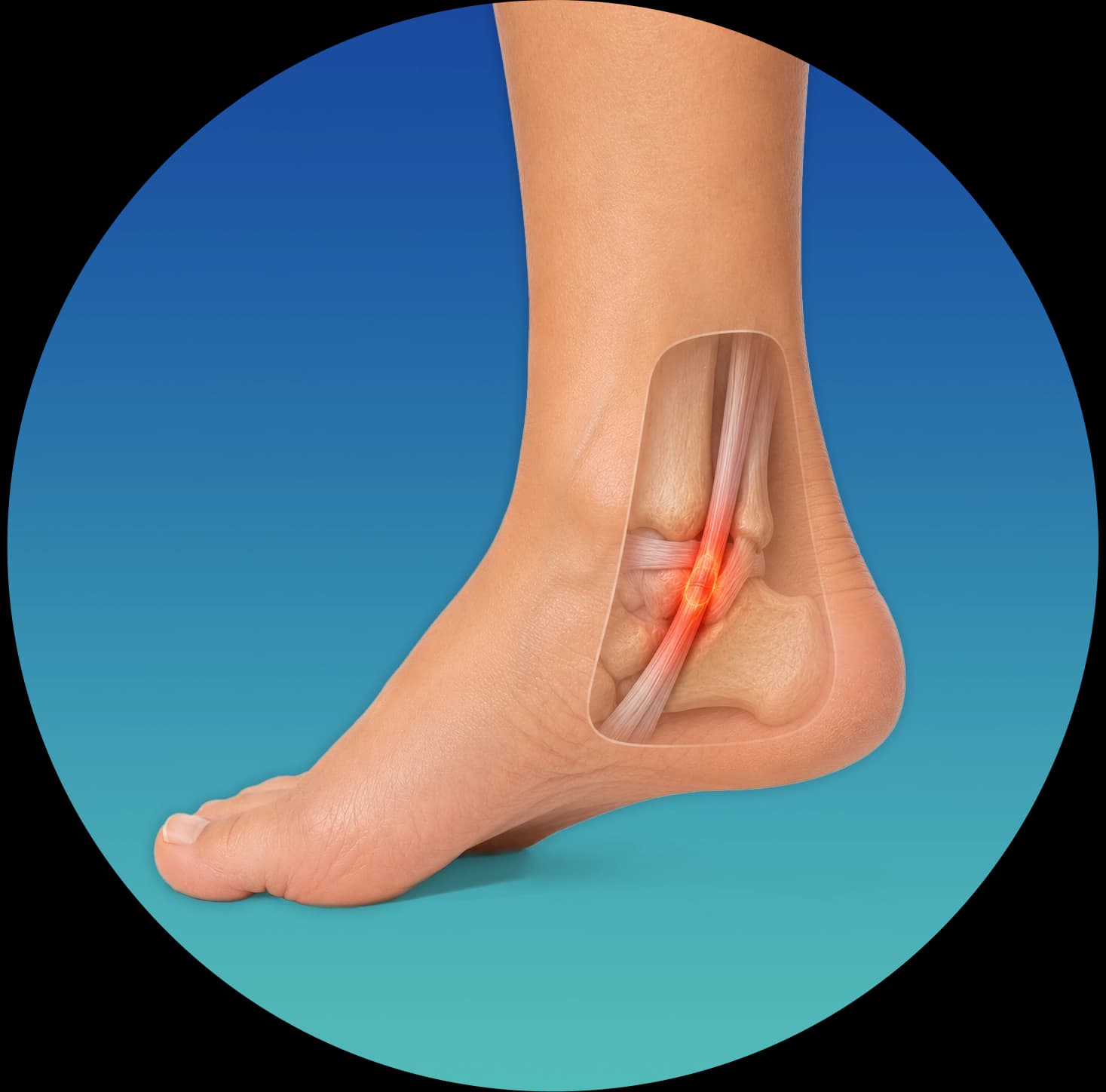
The posterior tibial tendon runs from your calf, down behind the inner ankle bone, and into the underside of your foot. Its job is to hold up your arch and steady every step you take.
When it is overworked or strained, it becomes inflamed and irritated — this is posterior tibial tendonitis, often called “post-tib” tendonitis. Left to progress, it can slowly flatten the arch, which is why early care matters so much.
Symptoms You Might Notice
The signs usually build up gradually — easily mistaken for general ankle tiredness until they start making themselves impossible to ignore.
During walking & stairs
Aching inner ankle pain
The clearest signal — a nagging ache or tenderness along the inside of the ankle that builds with walking, stair climbing or any sustained time on your feet.
Intensity
After prolonged standing
Arch that feels like it’s giving way
As the tendon fatigues under load, the arch loses its support. A growing sense that the foot is sinking inward — particularly noticeable after long kitchen shifts or market runs.
Intensity
At the end of the day
Foot fatigue and weakness
A tired, heavy feeling in the foot, with weakness when pushing off the ground. Swelling along the inner ankle that lingers into the evening is another sign not to overlook.
Intensity
Also watch for
Swelling along the inner ankle
Arch that looks or feels like it is flattening
Progressive inward tilting of the heel
Why Posterior Tibial Tendonitis Happens
It is usually an overuse problem — the tendon carrying more load than it can handle, over time, without adequate support.
The cost of waiting
This condition does not stand still. Untreated, posterior tibial tendonitis tends to progress — and a tendon that fails completely can leave a permanently flattened foot that is far harder to treat. Acting early is, quite simply, easier.
Overpronation
Feet that roll inward with each step place constant, repetitive strain on the posterior tibial tendon — the single most common mechanical driver of this condition.
About OverpronationSudden jump in activity
A new running programme, a sudden increase in training load or taking up a new sport can overload the tendon before it has had time to adapt to the demand.
Long hours on hard floors
Standing jobs, long commutes and hard domestic floors deliver sustained load that the tendon must brace against all day — often without adequate footwear support.
Unsupportive footwear
Flat shoes, worn-down soles and dress footwear with little arch structure leave the tendon doing the job that shoes should be sharing — hour after hour.
Body weight and age
Additional body weight multiplies daily load on the tendon, and women over 40 face a statistically higher risk as tendon elasticity naturally changes with age.
How Stride Podiatry Treats Posterior Tibial Tendonitis
We do not just calm the inflammation — we treat the root cause. We look at how your foot, ankle, knee and posture work together, then build a plan made for you.
Treatment may also include dry needling, cupping therapy and personalised home-exercise programming — tailored to your recovery.
19+
Years
3
Cities
500+
Students Trained
10K+
Patients Treated
Dr. Pallavi Singh
Founder · Stride Podiatry India
Since 2014, Stride Podiatry has helped over 10,000 people walk free of foot pain. Founded by Dr. Pallavi Singh — a foot specialist with 19+ years of experience and the Indian Podiatry Association's Lifetime Achievement Award — our clinics treat the person, not just the pain.
You leave with a clear plan.
At our Mumbai clinic
A homemaker in her forties — on her feet from the early-morning kitchen rush through market runs, housework and endless stair climbs. First came a dull ache on the inside of her ankle each evening; then her arch began to feel like it was giving way, and familiar sandals stopped feeling steady. A gait analysis at Stride traced it to overpronation that had quietly overloaded her posterior tibial tendon for years. With custom orthotics, manual therapy and a few simple strengthening exercises, the evening ache eased — and the stairs stopped being something to dread.
Frequently Asked Questions
Not quite — but they are closely linked. The tendon helps hold up your arch, so when it weakens, the arch can gradually flatten. Treating the tendon early helps protect the arch.
Many people feel clear improvement within a few weeks of starting the right treatment, though tendons heal slowly and a full recovery can take a few months. Starting early shortens the journey.
Often yes, but usually with changes — adjusted load, the right footwear and orthotic support. We will guide you so that activity helps your recovery instead of setting it back.
Rarely. Caught early, posterior tibial tendonitis responds well to orthotics, manual therapy and strengthening. Surgery is only considered for advanced cases where the tendon has failed.
Activity loads the tendon. Early on, rest settles the pain — but if it keeps returning, the tendon needs support and treatment, not just rest. That is well worth an assessment.
Book Your Appointment
Imagine walking, climbing stairs and standing through your day without that ache on the inside of your ankle.
With the right care, that is well within reach — and it begins with one simple visit. Book your appointment online, or call Stride Podiatry. Catch this early, and the path back is short.