
Metatarsalgia Treatment for Ball-of-Foot Pain Relief
A burning, aching pain in the ball of your foot — as though a small stone is lodged in your shoe that you simply cannot shake out. That is metatarsalgia. It is one of the most common forefoot complaints we see at Stride Podiatry — and it responds very well to the right care.
At a Glance
Metatarsalgia
Affects
Ball of foot (forefoot)
Typical onset
During prolonged activity
Pattern
Worsens with weight-bearing, eases with rest
Recovery
Weeks with proper offloading
Surgery
Very rarely needed
What Is Metatarsalgia?
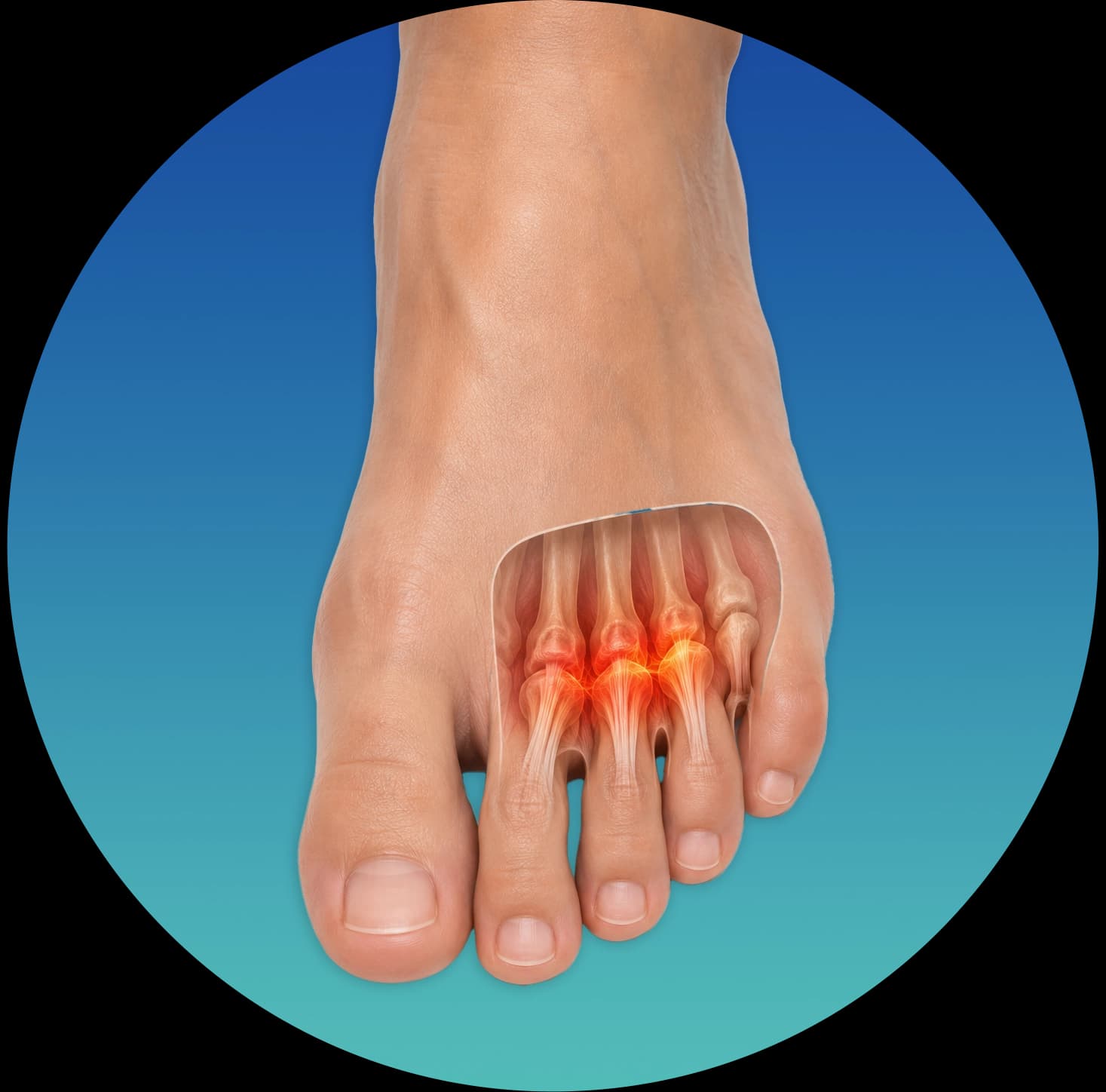
Metatarsalgia is pain and inflammation in the ball of your foot — the cushioned area just behind your toes, where the long metatarsal bones meet the ground.
It is not a single disease but a signal that this part of your foot is taking more pressure than it was built to handle. With every step, that overloaded area becomes irritated — and the ache settles in. Understanding why it is overloaded is what makes treatment last.
Symptoms You Might Notice
Metatarsalgia has a very recognisable feel — one that tends to build quietly before it becomes impossible to ignore.
While standing & walking
Aching, burning forefoot pain
The most consistent signal — a sharp, burning or aching pain in the ball of the foot that builds steadily with every step, and worsens the longer you are on your feet.
Intensity
On hard surfaces or barefoot
Stone-in-shoe sensation
That peculiar feeling of walking on a pebble or stone that shifts with your weight — often most pronounced on tiled or hard floors without the cushioning of footwear.
Intensity
After a long day on your feet
Pain that eases — then returns
Rest brings relief, but the ache comes back the moment you are active again. This cycle of pain and relief is the forefoot telling you it is carrying more load than it can comfortably sustain.
Intensity
Also watch for
Tingling or numbness in the toes
Discomfort worse barefoot on hard floors
Pain that shifts your gait to spare the forefoot
Why Metatarsalgia Happens
It builds up when pressure is concentrated on the forefoot — usually from a mix of footwear choices, activity levels and foot mechanics.
The cost of waiting
Left unaddressed, forefoot pain rarely settles on its own. Many people quietly start to walk differently to spare the area — which carries the strain on to the toes, knees, hips and back, turning one manageable problem into several.
High heels and narrow shoes
Pointed toes and elevated heels tip body weight forward onto the metatarsal heads, concentrating load on a small area with every step — the most common footwear driver.
High-impact activity
Running, jumping and prolonged time on hard surfaces deliver repetitive forefoot impact that accumulates faster than the tissue can recover from, especially without adequate cushioning.
Foot shape and structure
A high arch, bunions or hammer toes alter how load is shared across the forefoot, pushing disproportionate pressure onto the metatarsal heads with each stride.
About BunionsAge-related fat pad thinning
The natural cushioning beneath the ball of the foot thins with age, reducing the shock absorption that once protected the metatarsal heads from impact.
Carrying extra body weight
Additional body weight multiplies forefoot load with every step — accelerating the inflammation cycle and making recovery harder without mechanical support.
How Stride Podiatry Treats Metatarsalgia
We do not just soothe the ball of your foot — we find out why it is overloaded, and fix that. Looking at how your whole foot shares weight, we build a plan made for you.
Treatment may also include dry needling, footwear guidance and personalised home-exercise programming — tailored to your recovery.
19+
Years
3
Cities
500+
Students Trained
10K+
Patients Treated
Dr. Pallavi Singh
Founder · Stride Podiatry India
Since 2014, Stride Podiatry has helped over 10,000 people walk free of foot pain. Founded by Dr. Pallavi Singh — a foot specialist with 19+ years of experience and the Indian Podiatry Association's Lifetime Achievement Award — our clinics treat the person, not just the pain.
You leave with a clear plan.
Frequently Asked Questions
High heels tip much of your body weight forward onto the ball of your foot, so the metatarsal area is loaded with every step. Lower, wider shoes — and the right support — take that pressure off.
Not exactly. Both cause forefoot pain, but a neuroma is a thickened nerve and often brings sharper, more electric pain or numbness. A proper assessment tells them apart — and the treatment differs.
Usually yes, with adjustments — softer surfaces, supportive footwear and orthotic cushioning. We will guide your activity so it supports recovery rather than feeding the pain.
For metatarsalgia, they are one of the most effective tools we have. A custom orthotic with metatarsal support redistributes pressure away from the sore area, so each step lands more comfortably.
Many people notice relief within a few weeks of offloading the forefoot properly. Lasting comfort comes from also correcting the cause — footwear, foot mechanics or load.
Book Your Appointment
Imagine walking through a full day — work, errands, an evening stroll home — without that stone-in-the-shoe ache.
With the right care, that is well within reach — and it begins with one simple visit. Book your appointment online, or call Stride Podiatry. Let's take the pressure off, for good.