
Bunion Treatment for Comfortable, Pain-Free Feet
That bony bump at the base of your big toe is more than a cosmetic worry — it can ache, swell, and make once-comfortable shoes feel impossible. A bunion is common, well understood, and with the right care it can be kept comfortable for years.
At a Glance
Bunions
Affects
Base of the big toe joint
Onset
Develops gradually over years
Pattern
Worse in tight or narrow shoes
Progress
Slows with early care
Surgery
Often avoidable
What Is a Bunion?
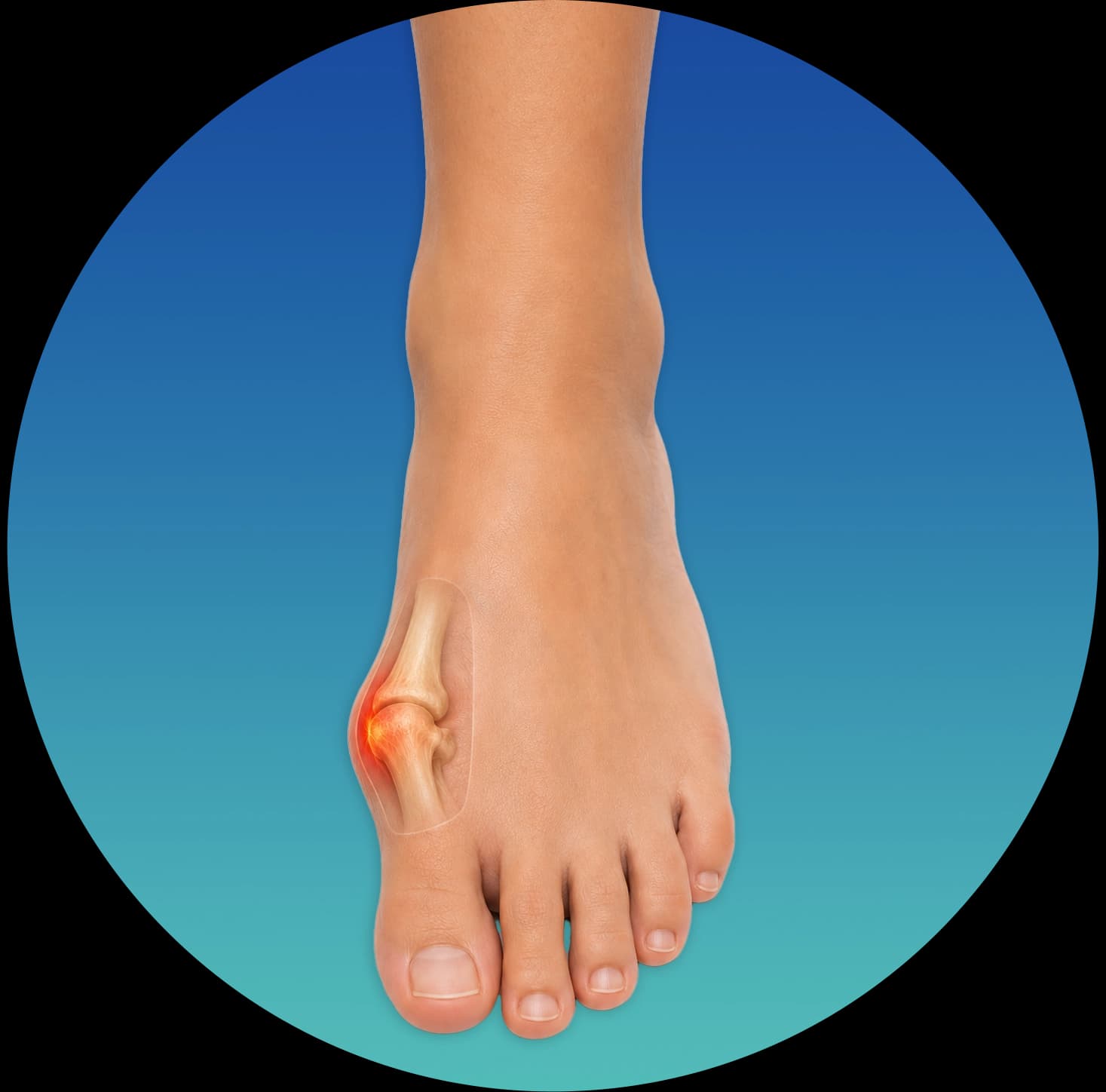
A bunion forms when the joint at the base of your big toe slowly shifts out of line. The toe leans in towards its neighbours while the joint pushes outward, creating that familiar bony bump on the inner side of the foot.
It is not simply a growth — it is a gradual change in the structure of the joint, which is why it tends to develop over years rather than overnight. Its medical name is hallux valgus, and caught early, it responds very well to careful, non-surgical care.
Symptoms You Might Notice
Bunions develop slowly, and the signs build with them — from the first hint of a bump to a joint that aches through the day.
The visible sign
A bony bump at the base of the big toe
The clearest sign of a bunion is the bump itself — a firm, bony prominence on the inner side of the big toe joint. The big toe leans in towards its neighbours as the joint pushes outward, and over time the bump becomes harder to miss.
Intensity
Pain & inflammation
Soreness, swelling and warmth at the joint
The joint aches and feels sore, often worse after a day in shoes. It can swell, and the skin over the bump may look red or feel warm to the touch — a sign the joint is irritated and under pressure.
Intensity
Stiffness & rubbing
A stiff toe, with corns and hard skin
The big toe can lose some of its movement and feel stiff. Where the shifted toes rub together or against your shoes, corns and patches of hard skin build up — adding their own discomfort to the bunion itself.
Intensity
Also watch for
The second toe being crowded or pushed out of place
Difficulty finding shoes that feel comfortable
The bump becoming more prominent over months and years
Why Bunions Happen
Bunions usually develop from a mix of how your feet are built and how they are used — rarely a single cause, more often several working together over time.
Bunions are progressive
Left unmanaged, the joint tends to drift further, the bump grows, and the second toe can be pushed out of place. Caring for a bunion early keeps it comfortable, slows its progress — and keeps surgery off the table.
An inherited foot type
Bunions often run in families. If your parents had them, you have likely inherited a foot structure more prone to the joint drifting out of line.
When the foot rolls inward or the arch flattens, uneven stress is placed on the big toe joint with every step — gradually pushing it out of alignment.
Tight, narrow or high-heeled shoes
Shoes that squeeze the toes together, or tip your weight forward onto the joint, accelerate the drift. They rarely cause a bunion alone, but they speed one along.
Loose, flexible ligaments
Ligaments that are naturally loose give the big toe joint less to hold it in place, allowing it to shift more easily over the years.
Arthritis and the changes of age
Arthritis affecting the joint, and the natural loss of stability in the foot with age, both make the joint more likely to drift.
How Stride Podiatry Treats Bunions
We cannot wish a bunion away without surgery — but we can do something just as valuable: relieve the pain, protect the joint and slow the bunion’s progress. Your plan is built around what we find in your assessment.
Treatment also includes practical footwear guidance — shoes that give your toes room to breathe — and simple aids such as padding and toe spacers that take the rub and pressure off the bump.
19+
Years
3
Cities
500+
Students Trained
10K+
Patients Treated
Dr. Pallavi Singh
Founder · Stride Podiatry India
Since 2014, Stride Podiatry has helped over 10,000 people walk free of foot pain. Founded by Dr. Pallavi Singh — a foot specialist with 19+ years of experience and the Indian Podiatry Association's Lifetime Achievement Award — our clinics treat the person, not just the pain.
You leave with a clear plan.
Frequently Asked Questions
The bony bump itself can only be removed surgically. But surgery is far from the first step — careful podiatric care relieves the pain, protects the joint and can slow the bunion’s progress, and many people stay comfortable for years without an operation.
Bunions do tend to progress, but the pace varies a great deal. Correcting the underlying strain with orthotics and the right footwear is the best way to slow that progress and keep the joint comfortable.
Splints and toe spacers can ease discomfort and are a useful part of care, but they do not straighten the joint permanently. They work best alongside orthotics that address the cause.
Narrow, pointed or high-heeled shoes squeeze the toes and load the bunion joint. Shoes with a wide toe box and good support let the joint sit comfortably — often a noticeable relief on its own.
No — anyone can develop a bunion. They are more common in women, partly due to footwear styles, but inherited foot shape and mechanics affect everyone.
Book Your Appointment
Imagine slipping on your shoes and heading out for the day — with no nagging ache at the side of your foot.
With the right care, a comfortable bunion is well within reach. Book your appointment online, or call Stride Podiatry. Let's take the pressure off that joint — starting now.