
Achilles Tendonitis Treatment for Heel and Calf Pain Relief
A stiff, tender ache at the back of your heel — sharpest with your first steps, and again after exercise. That is the signature of Achilles tendonitis, one of the most common overuse injuries we see. Caught in good time, it responds very well to the right care.
At a Glance
Achilles Tendonitis
Affects
Back of heel & lower calf
Onset
Morning & after activity
Pattern
Stiff first thing, flares with load
Recovery
Responds well to early treatment
Surgery
Rarely needed
What Is Achilles Tendonitis?
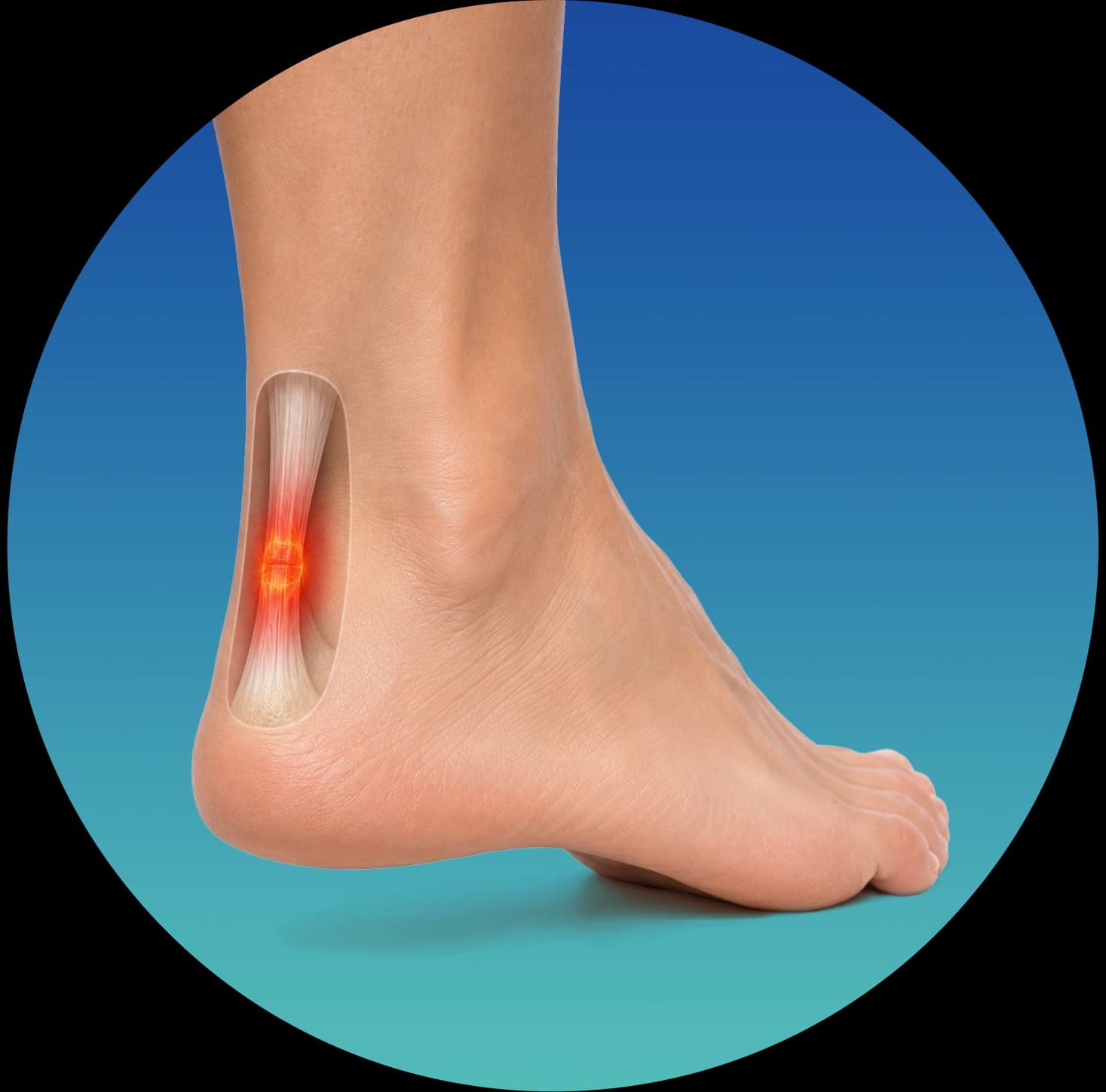
The Achilles tendon is the strong cord that connects your calf muscles to your heel bone, and it carries enormous load every time you walk, climb or push off. Achilles tendonitis is when that tendon becomes irritated and inflamed, usually from being worked harder or faster than it is ready for. You may also see it called Achilles tendinopathy — the term clinicians now tend to prefer, since longer-standing cases often involve gradual wear in the tendon rather than active inflammation.
It is most often felt just above the heel, or where the tendon meets the bone. The pain is unmistakable — but the good news is that when it is caught early and treated correctly, most people recover fully without the need for surgery.
Symptoms You Might Notice
Achilles tendonitis tends to announce itself clearly — the back of the heel is hard to ignore. The pattern of when and how the pain appears tells us a great deal about what is happening in the tendon.
Morning & first steps
Stiffness and pain at the back of the heel
The tendon tightens overnight. The first steps out of bed bring a stiff, tender ache at the back of the heel — sometimes a limp for the first few minutes. Easing as you warm up is typical, but that morning pain keeps returning if the load on the tendon is not addressed.
Intensity
During & after activity
Aching that builds with running and stairs
As you push harder — running, climbing stairs, walking uphill or pushing off the ground — the tendon makes itself known. The ache builds through the activity and lingers after, sometimes worsening the next morning if you have pushed too far.
Intensity
Over days and weeks
Thickening, swelling and a tendon that feels wrong
A tender lump or thickened cord at the back of the ankle, swelling that worsens through the day, a creaking sensation as you move the ankle. These signs point to a tendon under prolonged stress — one that tends to worsen rather than resolve on its own.
Intensity
Also watch for
A tender lump or thickening along the back of the heel
Pain that worsens going upstairs or on an incline
A tight or restricted feeling when you flex the ankle
Why Achilles Tendonitis Happens
It is usually an overload problem — the tendon asked to do more than it is currently prepared for, whether that is too much, too soon, or the wrong kind of load altogether.
The cost of waiting
An irritated Achilles does not simply wait it out. Pushed on without care, the tendon can weaken and degenerate — a slower, more stubborn problem to treat, and one that raises the risk of a more serious tear. Early treatment is far easier treatment.
A sudden jump in activity
More distance, more speed, hill sessions or a new sport — when the tendon is asked to do significantly more than it has been doing, it has little time to adapt and becomes inflamed.
Tight or weak calf muscles
Calf muscles that are tight pull constantly on the tendon with every step. Weak calves cannot absorb enough load themselves, transferring the excess directly to the Achilles.
When the foot rolls inward with each step, it adds a twisting strain to the Achilles that a straight-loading tendon was not designed to handle — compounding the overuse.
Worn-out or unsupportive footwear
Shoes that have lost their cushioning or heel structure offer little protection, sending more impact force through the tendon with each stride.
Natural loss of tendon flexibility with age
Tendons become stiffer and less resilient over time. The same training load that caused no trouble at 25 can trigger tendonitis at 45 — not a reason to stop, but a signal to support and strengthen more deliberately.
How Stride Podiatry Treats Achilles Tendonitis
We settle the irritated tendon and fix what overloaded it — so it heals, and stays healed. Your plan is built around what we find in the assessment.
Treatment also includes targeted calf-strengthening exercises and personalised footwear and training guidance — so what you do day to day supports the tendon rather than reloading it.
19+
Years
3
Cities
500+
Students Trained
10K+
Patients Treated
Dr. Pallavi Singh
Founder · Stride Podiatry India
Since 2014, Stride Podiatry has helped over 10,000 people walk free of foot pain. Founded by Dr. Pallavi Singh — a foot specialist with 19+ years of experience and the Indian Podiatry Association's Lifetime Achievement Award — our clinics treat the person, not just the pain.
You leave with a clear plan.
Frequently Asked Questions
Usually not. Complete rest can leave the tendon weak. The proven approach is guided, progressive loading — strengthening exercises that rebuild the tendon — alongside adjusting the activity that overloaded it.
Many people improve noticeably within a few weeks of starting the right strengthening, though tendons heal slowly and a full recovery often takes a few months. Starting early shortens the road considerably.
Often yes, but with changes — adjusted load, the right footwear and orthotic support. We will guide your activity so it supports recovery rather than setting it back.
The tendon tightens while you rest overnight, so the first steps feel stiff and sore. Easing as you move is a good early sign — but morning pain that keeps returning should be assessed.
Rarely. The large majority of Achilles tendonitis settles with strengthening, orthotics and manual therapy. Surgery is only considered for advanced or long-standing cases that have not responded to thorough conservative care.
Book Your Appointment
Imagine moving through your morning — and your next run — without that tight, tender pull at the back of your heel.
With the right care, that is well within reach. Book your appointment online, or call Stride Podiatry. Let's get your stride back.